
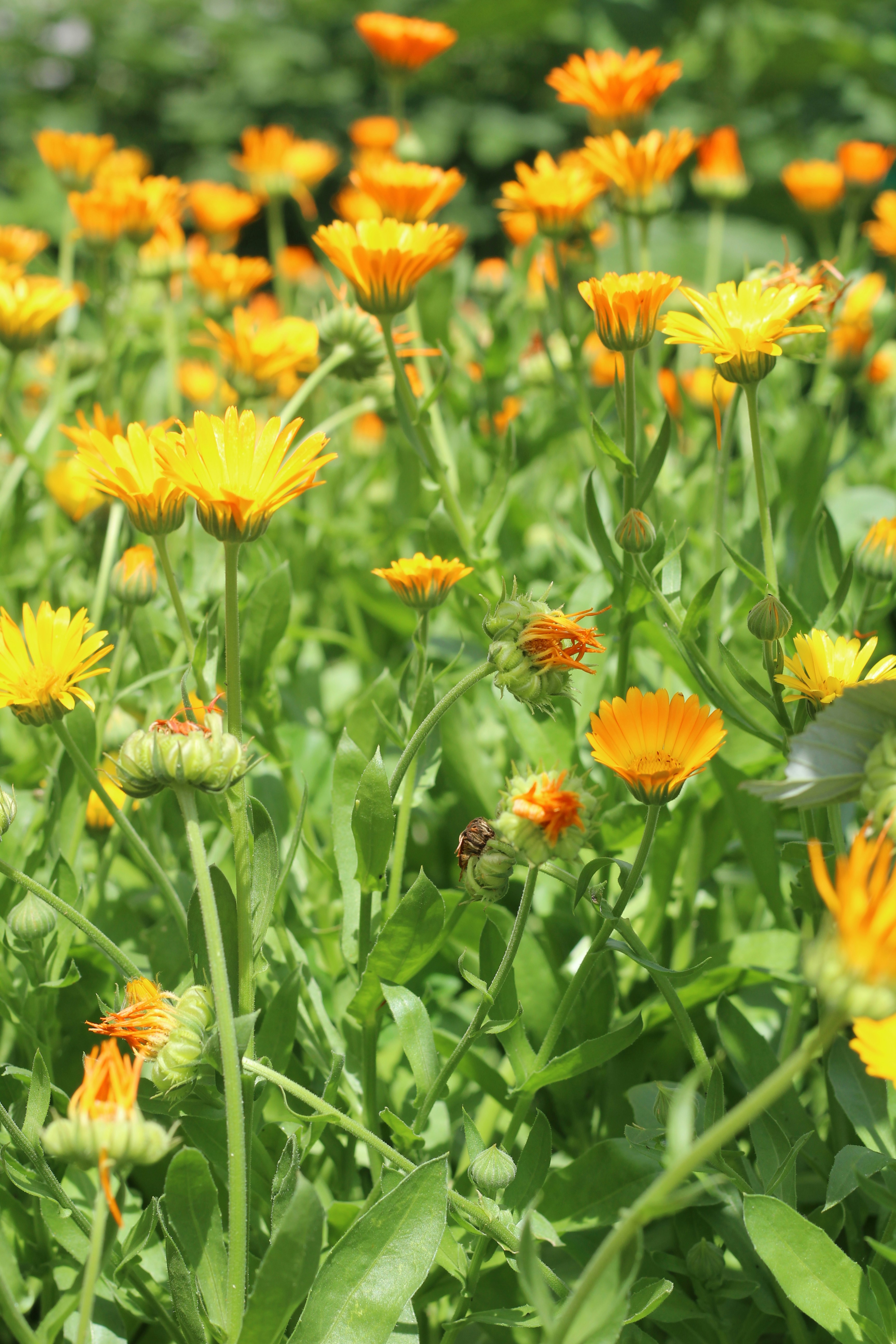
Calendula officinalis L. – Calendula – Asteraceae
Calendula is my favorite medicinal flower to grow, and one of the most versatile medicinal plants in the apothecary garden.
This easy to grow medicinal plant attracts beneficial insects and pollinators, deters rabbits and deer, acts as a trap plant for larvae of some Lepidoptera species when used as a companion plant.
Prolific self-seeder, grows in a variety of climates and soils with minimal care. Blooms from early spring through autumn, sometimes even in winter.
Excellent for all kinds of culinary applications, from salads to soups. Eases gallbladder problems and indigestion, and is anti-inflammatory on the digestive system. Eases painful periods.
Antifungal both internally and externally.
Anti-inflammatory for skin infections, wounds, bleeding, bruising, strains, and more. Good for slow-healing wounds, skin ulcers, and minor burns when applied as a lotion, poultice, or compress.
Folklore
Calendula assists us in moving that which has stagnated in our lives, to reclaim our boundaries and make use of our energy. Encouraging us to recognize our own wealth and potential, that abundance is available to all of us.
Was hung as wreaths or garlands for weddings, religious rituals, remembering the dead, and protection.
To encourage prophetic dreams and protection, scatter petals under your bed.
Ancient Egyptians, Romans, and Greeks used Calendula to rejuvenate skin. It was added to baths to inspire respect and admiration of everyone you meet.
To warm and dry the emotional-energetic pools we’ve been avoiding – use calendula.
Sending someone Calendula flowers is flower lore language for “I’m thinking of you”.
Girls who touch the flower petals with their bare feet would come to understand the language of the birds.
Carrying petals in your pocket would help justice smile favorably on you.
Shakespeare said that Calendula “wakes up weeping” because it collects dewdrops in its closed bud at night, and when it wakes with the sun and opens its petals, the droplets drip like tears. Calendula has been known as the flower of grief.

