Licorice

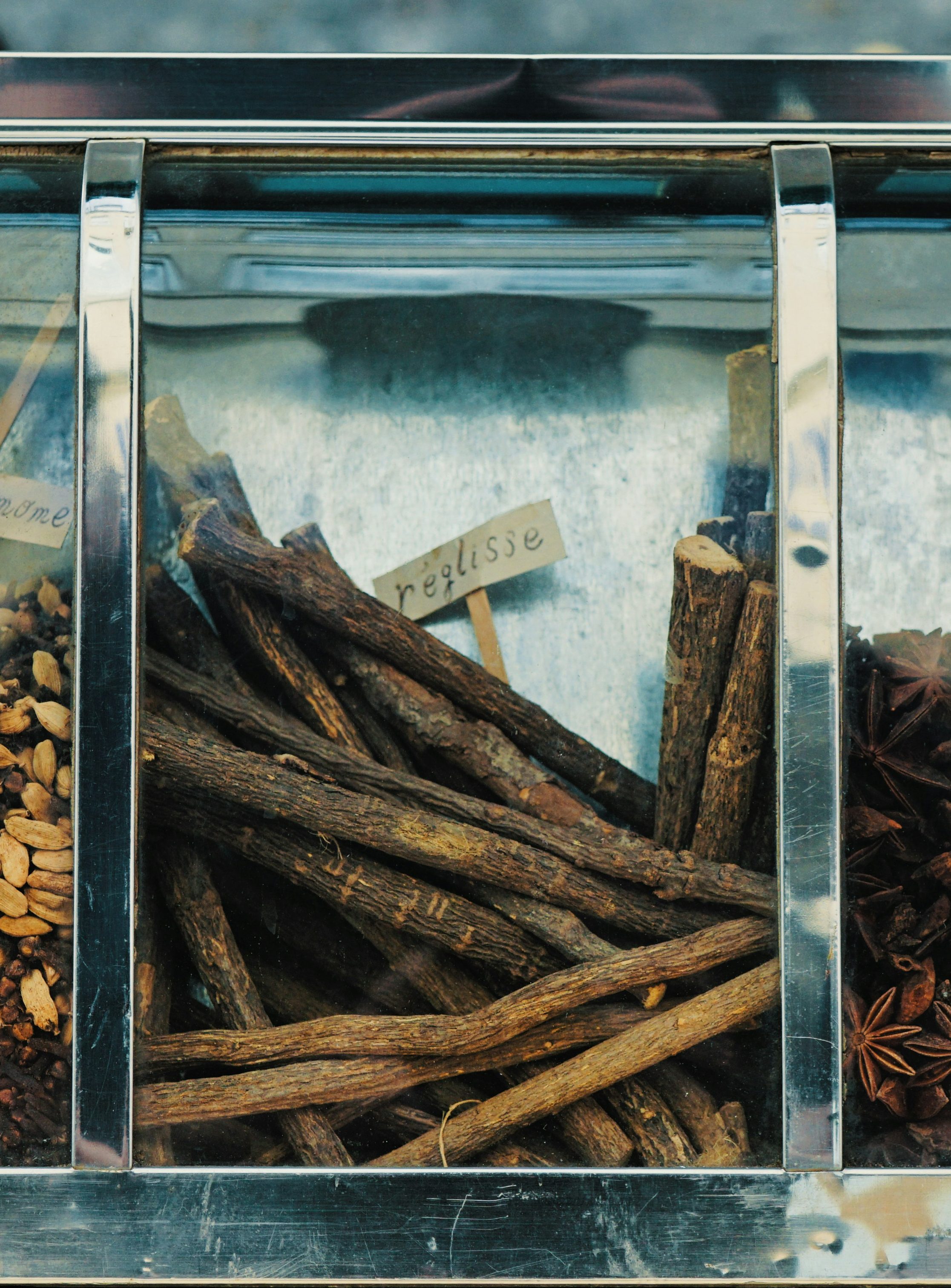
Dried licorice root sticks (Glycyrrhiza glabra) displayed in a clear container.
1–2 minutes

read

Licorice is a traditional herbal remedy with an ancient history and worldwide usage.

Used to treat respiratory viral and bacterial infections, oral bacterial infections, and as an adjunct for bacterial infections of the gastrointestinal tract and respiratory tract.

Traditional Chinese Medicine.


Plant Details

Botanical identity
  • Latin name: Glycyrrhiza glabra
  • Family: Fabaceae
  • Native range: Southern Europe, Middle East, part of Asia. Related species, Glycyrrhiza lepidota (wild licorice) grows across North America.
Medicinal profile
  • Parts used: Root
  • Herbal actions: Antibacterial, Antihepatotoxic, Antiinflammatory, Antispasmodic, Antitussive, Antiviral, Demulcent, Emmolient, Expectorant, Immunomodulator, Immunostimulant, Laxative, Mucoprotective
  • Body systems: Cardiovascular, Digestive, Endocrine, Integumentary, Immune, Respiratory
  • Energetics: Moistening & Demulcent
Growing profile
  • Sun needs: full sun
  • Water: moderate
  • Difficulty: beginner
Simple preparation note

The extract, in the form of a lozenge, is held in the mouth until it has dissolved.

Science + Research

Prevents viral growth/replication. Block virus from entering cells; kills and deactivated viral particles.